
[HunNan Conversations I] From a Regional Perspective, the So-Called ‘Letting Some Get Rich First to Drive Common Prosperity’ Is a Scam
Why does the Northeast get ‘bled’ the more it develops? A deliberately avoided underlying logic may explain the region’s decline, population loss, and its broader fate.
HunNan: I remember that Guangzhou Honda, Beijing Hyundai, and Shanghai Baosteel were all originally planned—according to the investors’ intentions—to be located in Southern Manchuria (referring to central–southern Liaoning), but the central authorities vetoed it. At the very beginning, Japanese and Korean investments were all aimed at Southern Manchuria, and the center did not allow it. In fact, if they had been allowed to invest in Southern Manchuria first, and then naturally spill over into North China and East China, that would have been a more gradual and reasonable sequence, and it would also have aligned with the principle of “letting some get rich first to drive common prosperity.” So when you look back at this history, you realize that what was said back then about letting some get rich first was actually a lie. They never intended to let you get rich in the first place, because deep down they knew very well that there was no such thing as “those who come later.” The wealth of the Northeast has mostly served as a blood bank for the center, rather than wealth retained for itself. Of course, wealth from any part of China bears this obligation, but the South understands the underlying logic of this system much more deeply, so they manage to retain more wealth locally.

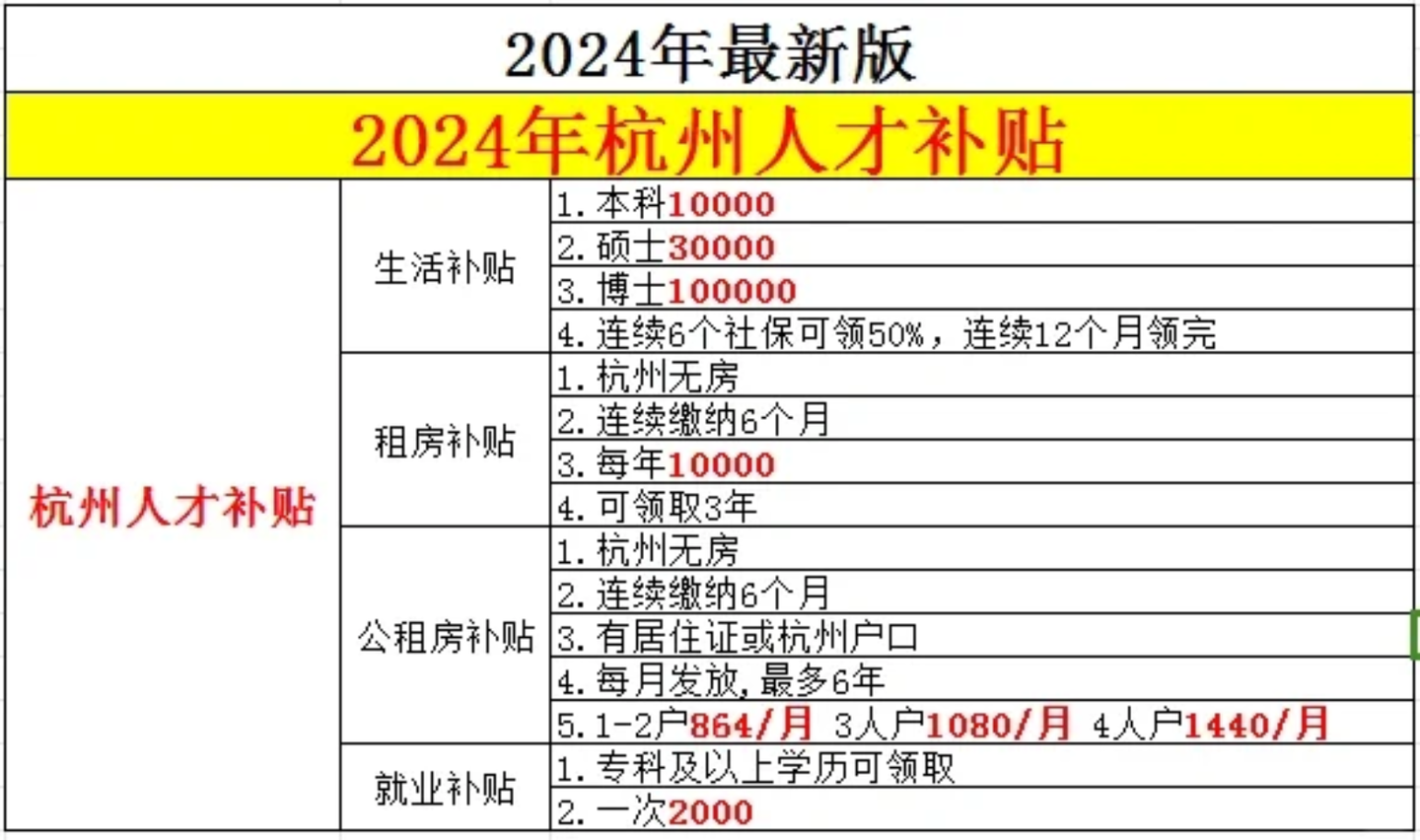
Hangzhou’s talent subsidy policy is the best example. Why is it so generous? Because they understand that if this money is not spent, it will be handed over, and next year the required contribution will be even higher. So instead, they inflate their own budgets, spread them widely, and ideally even run deficits—making the following year easier to deal with. They understand this, and there are people at higher levels cooperating with them. The Northeast has never had such a path. As for the center’s attitude toward the Northeast, it is as if they would gladly feed it filth, squeeze out milk and blood, feed the filth only once, and then come back every day to milk and bleed it.
Wangxiang: Strong trunk, weak branches. The richer Liaoning’s industries appear on paper, the more severe the extraction from this place becomes.
HunNan: Exactly. That’s why locals are forced to “lie flat” just to survive. It’s like the massive blackout in the Northeast in 2022—this was actually a form of implicit resistance. If the center squeezes like this, then traffic lights are shut off: no choice, no electricity. Make things ugly, make a big scene. But this approach can only provide temporary relief; in the long run there is no hope. This kind of nonviolent noncooperation only works on foreigners—it doesn’t work on China.
Wangxiang: All the leaders who have governed the Northeast are sinners. Chen Sanliang is just a typical example.

HunNan: To China, they are all capable ministers and competent officials. To the Northeast, they are nurses dispatched from Beijing. They compete with one another to see who can drain more blood without killing the livestock. Political achievements in the Northeast are measured by who can bleed more, who knows how to bleed better. It’s not about making the cake bigger, but about who can scrape more of the cake toward the center. And at the same time, they must always be vigilant against any possibility of locals making their own cake—digging up the roots entirely.
After all is said and done, the truth is very simple. There is nothing particularly profound or complex about it. Put plainly: China and Manchuria are not a community of interests, let alone a community of destiny. We and they cannot coexist and prosper together. If they want to laugh, we must cry.
Forcing deindustrialization and allowing only agriculture to develop is the best example. In China, agriculture and farmers are not an industry and a profession, but a class and an identity. They have never been the backbone of society, but the very bottom. Their social obligations are almost limitless, while their social welfare is close to zero.

Wangxiang: If agriculture were a high–value-added, profitable industry, I can responsibly say that the Northeast would be de-agriculturalized.
HunNan: In places like the two “triangles” (the Yangtze River Delta and the Pearl River Delta), officials who are good at this kind of calculation are the mainstream. And their ability to implement policies that benefit local interests is largely because there are people above them backing it. From this chain, you can see that this empire is essentially a complete command-execution machine. It crawls within the empire’s nervous system—unseen, but enormously powerful. Whoever occupies its brain can issue biological commands and set it in motion: nutrients begin to flow and concentrate, fat in some places is rapidly consumed while in others it accumulates quickly; muscles swell and grow with the throbbing of blood vessels, while other areas atrophy and degenerate. Whoever hijacks this nervous system controls destiny.
As for the myth that Northeasterners have already been fully “systematized,” it only takes understanding one point clearly: this system is external, not native to the Northeast. It was brought by China and is directly controlled by China. Chains are never part of the body itself. Look at East and West Germany, or North and South Korea, and it becomes obvious. What affects Northeasterners’ understanding of the situation is nothing more than a thin layer of window paper. That is, they have never regarded Northeasterners as Chinese, nor the Northeast as China. Once you deeply understand this point, all the “whys” are resolved.
Otherwise, who can explain this situation: a country loudly proclaiming great rejuvenation, soaring rise, and national strength, yet during its most triumphant, proud, and powerful decades, the region with the largest plains, the highest level of urbanization, and the most educated population instead faces an unprecedented historical decline, decay, and irreversible population loss. Who can explain this phenomenon? If you frame it in terms of a single country or nation, you can’t understand it. But if you frame it in terms of victor and vanquished, metropole and colony, you immediately get it.
If you think the article is good, please forward and share it.
If you have good ideas, please contribute!
Feel free to reward the author!
Your encouragement is our greatest motivation to move forward.

ETH
ETH: 0x786e11A0E7D97A6f8a110a1ab5Ba5D2F08eab011