
Never Forget National Humiliation, Revitalize Our Homeland
Commemoration of the Siege of Changchun
We must not forget... the most painful page in modern Manchuria history
Add to CalendarCommemoration of the Siege of Changchun
We must not forget... the most painful page in modern Manchuria history
Add to Calendar'The situation grew increasingly dire; more and more people in the city were starving to death. I personally saw several people lying by the roadside — one day they were there, and when I passed by the next day they were still there, their eyes wide open, their faces a purplish hue. That night a light rain fell, and I wondered where those people would take shelter. The next day, after the rain stopped, I passed that road again and saw them still lying there. Someone had kindly covered them with sacks, leaving only their heads visible. Each head and forehead had turned red and emitted a pungent stench — they had long since died.' — Excerpted from Mr. Shan Tianfang’s oral autobiography: 'Life Really Is One Word: Endure'
In 1948, an ordinary Manchurian family struggled to survive inside the besieged city of Changchun. The child of that family was Shan Tianfang — who would later become a master storyteller renowned for recounting great deeds.
But in that year his childhood was not a martial-arts saga; it was soaked in blood and tears, life and death.
Friends and relatives of the Shan family in Changchun were dying one by one of starvation. City residents tore strips from their own clothes to trade for a sip of water or a handful of beans. Corpses littered the streets, and the air reeked of rot and death. This was not fiction — this was the reality the people of the Manchuria endured.
All of this took place during what has been euphemistically called the “liberation of Changchun.”
Those who controlled the inland seats of power shamelessly whitewashed the event as a “liberation,” but the historical facts are horrifying: some 600,000 people were trapped inside the city, blockaded and cut off from food for five months. Under the guise of a “peaceful liberation,” more than 150,000 people starved to death — bodies everywhere, the land hushed. The brutal siege of Changchun left an abyssal wound on the land of the White Mountains and Black Waters. Tens of thousands of innocent civilians were starved to death under blockade. Yet in some histories the tragedy is downplayed as merely a “siege battle” in a civil conflict. That is not only an insult to the dead — it is a deliberate concealment of the truth. As sons and daughters of the White Mountains and Black Waters, we must recognize: the Siege of Changchun was not ordinary warfare — it was massacre; not “liberation,” but a naked atrocity against humanity.
How many still allow themselves to be fooled by the label “civil conflict”? How many still treat the Changchun siege as an unfortunate military necessity? We must ask: who used the lives of hundreds of thousands of Manchurian people as bargaining chips? Who, in the name of “unity,” enacted real bondage? The essence of the Siege of Changchun was a premeditated, organized campaign aimed at cleansing and plundering Manchurian people — a crime that amounted to ethnic extermination. It is further proof that inland imperial forces, amid brutal infighting over spoils, regarded the Manchuria as expendable.
These inland agents treated the Manchuria as a colony and the people of Changchun as an “other” to be exploited and sacrificed. It was the naked expression of their savage ambition.
We must understand that such horrors were rare when the people of the White Mountains and Black Waters enjoyed self-determination. History shows that only after the region’s sovereignty was taken away did the land become a chessboard for competing imperial forces. In the past we had our own industry and commerce, education, culture, even military autonomy. When inland agents seized control in the name of “unity,” what followed was the plundering of land and resources, control of economic lifelines, erosion of cultural identity — ultimately driving Manchurians into a humanitarian catastrophe. Resources were drained, power hollowed out, dignity trampled. The deaths in Changchun were not the inevitable costs of war; they were the consequence of losing sovereignty and becoming, in all but name, victims at the mercy of invaders.
Turning to the present-day Manchuria, those inland forces continue unremitting plunder and humiliation of this scarred land: population loss, hollowed-out industry, resource extraction, cultural marginalization. The evidence is clear — we are no longer the republic’s eldest son; we have become the autocratic state’s castoff. Behind this is a system led by coastal capitalists and aided by imperialist agents that systematically exploits and sidelines the people of the White Mountains and Black Waters.
When the wound of history has not yet healed, how can we allow them to rub salt into it with rhetoric? When a people’s dignity remains unreturned, how can they continue to bow and grovel to their oppressors? A nation without sovereignty has no voice; without voice there is no dignity, and without dignity there is no freedom or prosperity. The dead of Changchun bear witness to this truth with their bodies. If Manchurians today remain mesmerized by the false myth of a “unified China” and continue to accept marginalization, exploitation, and subjugation, history will mercilessly repeat itself.
These harsh historical facts keep reminding every Manchurian: the region’s future is not found in servility toward inland powers, but in rebuilding a sense of sovereignty, in cultivating regional pride, and in achieving political, economic, and cultural self-determination. Only by freeing ourselves from the systematic oppression of inland forces can we become self-reliant and strong.
We should remember our identity as the people of the White Mountains and Black Waters and engrave the blood and tears of the Siege of Changchun into our memory. National and personal grievances must not be forgotten; dignity and freedom must not be shaken.
The Manchuria must no longer be an empire’s granary or the stage for inland power struggles. What we need is a Manchuria that belongs to Manchurian people.
Let the victims of Changchun rest in peace, and let our black soil see the light again.
We must strengthen ourselves; the White Mountains and Black Waters must awaken! The blood debt of Changchun must never be forgotten; the future of the Manchuria must not be written by outsiders!
On August 15, 1945, when Japan surrendered, the Soviet Army had already occupied Xinjing (now Changchun), the capital of Manchukuo. The defeated Japanese army left behind large quantities of military supplies, part of which was transferred by the Soviet Union to CCP armed forces, providing equipment foundation for CCP's advance into Manchuria. Meanwhile, the CCP Central Committee decided to 'break through Shanhaiguan,' sending cadres and troops to bypass Shanhaiguan and enter the Manchuria to take over towns and military supplies as part of the Communist Party's strategy of 'advancing north and defending south.' In late October, the Eighth Route Army's Cao Lihuai led troops into Changchun under Soviet protection but withdrew on December 14 due to changes in KMT-CCP confrontation. At this time, Changchun had extensive Japanese-built infrastructure and a population that had grown from 150,000 before the 'September 18 Incident' in 1931 to about 700,000 by the end of the war.
In early 1946, the Nationalist Government Army gradually completed the takeover of major cities in the Manchuria, with Chiang Kai-shek's confidant Chen Cheng appointed as the director of the Manchuria Executive Office. Due to distrust of the Manchurian people, he disbanded the well-equipped local Manchurian troops trained by the Japanese army. Many of these unemployed soldiers were later recruited by the CCP's Eighth Route Army, inadvertently strengthening Communist forces in the Manchuria. In March 1946, Soviet forces completely withdrew from the Manchuria, and battles erupted between KMT and CCP forces around Siping and other areas. After four Siping campaigns between 1946 and 1948, the Nationalist Army's strength in the Manchuria rapidly declined from its peak. The CCP's 'Northeast Democratic Allied Army' gradually controlled the former South Manchuria Railway line and vast rural areas, forcing the Nationalist Army to defend only a few strategic cities like Changchun, Shenyang, and Jinzhou. By spring 1948, Changchun had become an isolated city for the Nationalist Army.
Changchun's population was approximately 500,000 in 1945. After the civil war between the KMT and CCP, the influx of refugees increased the city's population further. The main garrison forces consisted of the 60th Army, New 7th Army, and others, totaling about 100,000 troops. The Nationalist Army had insufficient pre-war supplies, and the city's food mainly relied on supplies from surrounding areas and air transport. The city government called for 'everyone to farm and train daily,' attempting to unite military and civilians in defending Changchun. However, before the city was besieged, the Nationalist Army failed to effectively evacuate ordinary citizens or provide food storage guidance, sowing the seeds for the later famine tragedy.
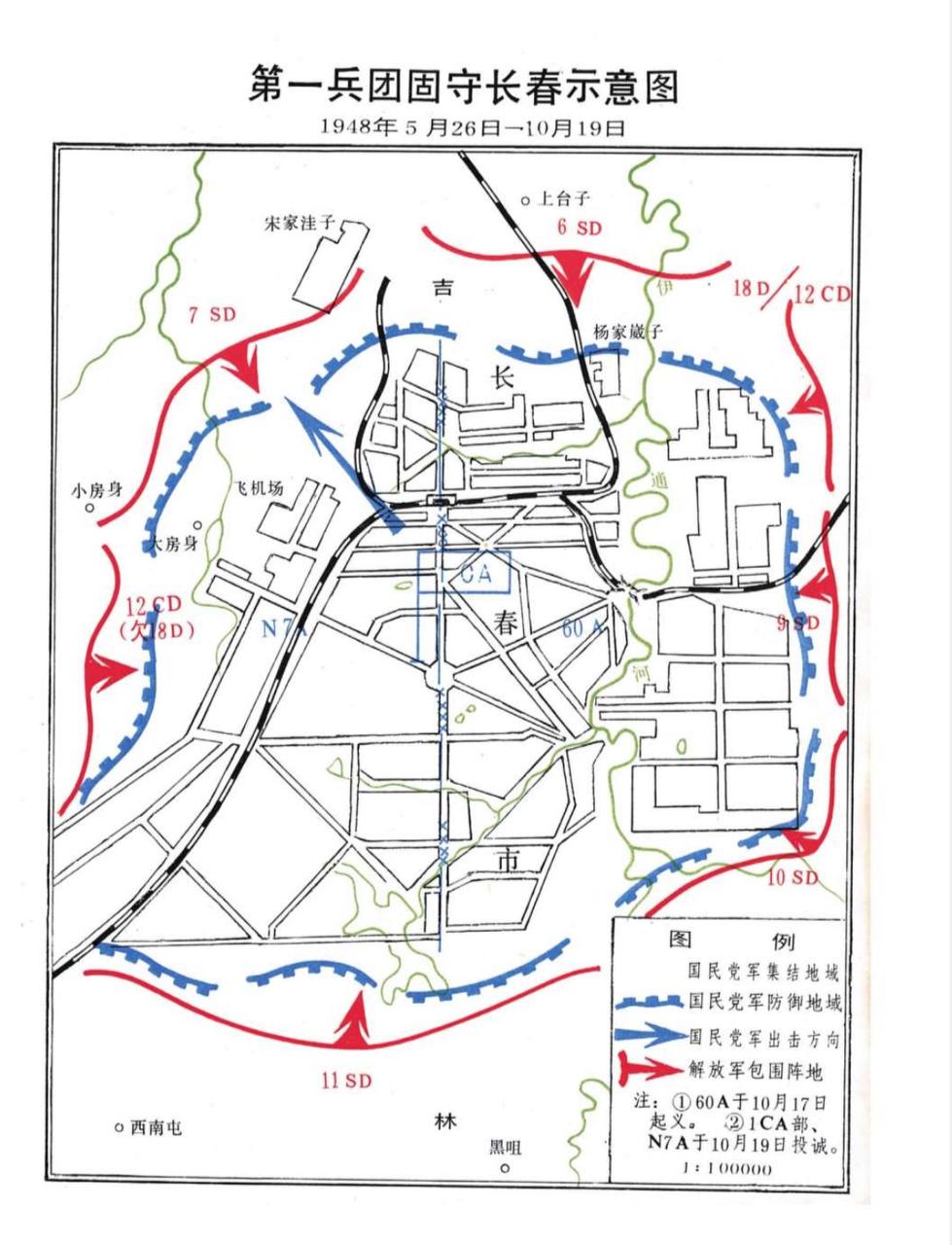
Before the campaign, the Northeast Bureau of the CCP Central Committee had originally planned to launch an assault on Changchun, intending to resolve the battle quickly within 10–15 days with over 300,000 troops from nine columns. On May 23, the People's Liberation Army (PLA) completed the encirclement of Changchun on all four sides, cutting off the Kuomintang (KMT) army's land and air supply lines, officially marking the start of the siege. However, Changchun had been a fortress city built and managed by the Japanese Kwantung Army for many years, with strong defenses and the possibility of reinforcements. On May 29, Lin Biao, the commander of the Fourth Field Army, cabled the Central Military Commission, stating that a direct assault had a low chance of success. He recommended moving the main field army to other operations and leaving a smaller force to besiege the city and force a surrender. On May 30, the Northeast Field Army decided to adopt a strategy of 'encircling without attacking,' strictly blockading Changchun and waiting for the enemy to run out of food and reinforcements. Mao Zedong approved this plan. From then on, the PLA's besieging forces were ordered to 'starve out the Changchun defenders without firing a single shot,' choosing to prolong the siege rather than risk a rash assault.
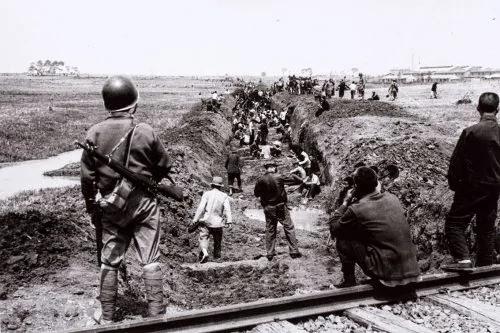
Shortly after the siege began, the Xijiao Airport in the western suburbs of Changchun fell to the PLA. The city's supplies then depended entirely on airdrops. According to an Associated Press estimate, the defending troops needed 40 airdrop sorties per day to have enough to eat. However, due to interference from PLA anti-aircraft fire, most transport planes did not dare to fly low, and airdropped supplies often scattered outside the city or were intercepted. In late June, the first signs of famine appeared in Changchun. Zheng Dongguo, the director of the Changchun headquarters, established a 'Wartime Food Control Committee' and ordered that 'civilians may only keep a three-month supply of grain; the rest must be sold to the government at a fixed price.' Violators would have their grain confiscated and be severely punished. This move was tantamount to grain confiscation, 'sacrificing the people to feed the army.' The defending troops began to plunder civilian grain reserves on a large scale, paying with high-denomination Fabi currency that was essentially worthless. Many civilians had all their grain taken, leaving them with only a few days' worth of food, making the KMT's promise of 'retaining a three-month supply' a hollow one. By the end of June and early July, grain prices in the city skyrocketed from a few yuan per jin to ten thousand yuan per jin, leading to hyperinflation. Subsequently, the Changchun branch of the Central Bank was forced to issue large-denomination banknotes, with face values in the hundreds of millions. Hunger began to spread. The few residents who had hidden grain dared not cook with open fires, fearing that the smoke would expose them to soldiers, police, or starving people who would rob them. The bodies of citizens who had died of hunger and disease began to appear on the streets.
As hunger intensified, thousands of citizens stormed the granary in the backyard of the Kantō Kaikan, which then served as the KMT's Changchun municipal government building, in an attempt to seize grain to eat. The defending KMT troops and police opened fire to suppress them, and the number of killed and wounded was difficult to ascertain. On the same day, on the front lines of the PLA's siege, Xiao Hua, the political commissar of the First Army Group, issued an order at a political work conference: 'All people leaving Changchun are to be stopped.' Even those on the verge of starvation were to be dealt with 'quickly,' meaning they were to be driven back into the city, to ensure that these refugees would not become a burden on the besieging forces. This directive reflected the CCP high command's early anticipation of a 'tide of starving people.' To prevent spies from infiltrating or to avoid easing the burden on the defending troops, the PLA front lines began to strictly intercept civilians leaving the city, allowing no one to cross the blockade line. Thus, the people of Changchun were trapped in a hopeless situation—facing guns demanding their grain inside the city, and bayonets blocking their way out. At this point, both the KMT and the CCP had reached a consensus on the issue of the starving people of the Manchuria; the ordinary people of Changchun were a burden to both sides, their lives treated as a liability to be foisted upon the other.
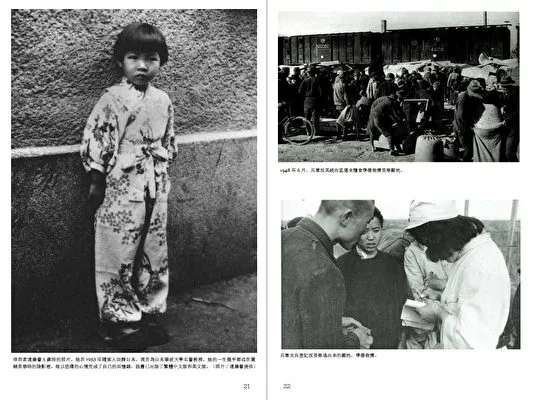
In July, the famine in Changchun became even more severe. Initially, the KMT authorities, to avoid undermining military morale, still forbade residents from fleeing. The mayor of Changchun, Shang Chuandao (a KMT official from Zhejiang), launched a propaganda campaign of 'military and civilian solidarity,' advocating for the joint defense of Changchun and proposing a fanciful self-rescue plan of 'cultivating wasteland within the city for grain.' But the reality was that even if they started tilling the roads to plant crops, they wouldn't be able to harvest until autumn, and the city's grain reserves would only last until the end of July. After mid-July, the number of deaths from starvation increased sharply, and the conflict between the military and civilians was on the verge of erupting, just one month after the KMT's slogan of 'reserving a three-month surplus of grain.' On July 19, Wei Lihuang, the commander-in-chief of the Northeast Bandit Suppression Headquarters, ordered Zheng Dongguo to 'defend Changchun to the death, to pin down the main force of the PLA from moving south.' The KMT high command was determined to make the defense of Changchun a long-term strategy to delay the CCP's offensives in North and East China and to protect the KMT's base in the Jiangsu and Zhejiang regions. In late July, Chiang Kai-shek realized that keeping hundreds of thousands of civilians trapped would only drag down the defending army and issued a secret directive: starting from August 1, 'evacuate the population within the Changchun checkpoints, allowing them only to exit, not to re-enter,' and ordered to 'collect all food and supplies from the people of Changchun for unified distribution by the government.' In other words, the KMT army began to systematically drive out the city's residents in batches. After thoroughly confiscating their food and belongings, the citizens of Changchun were cast out like a burden. Any humanitarian aid was intercepted by the KMT army, and not a single grain of rice from the outside world reached the mouths of the people of Changchun, as per Chiang Kai-shek's orders. This policy attempted to reduce the population to save food for military consumption.
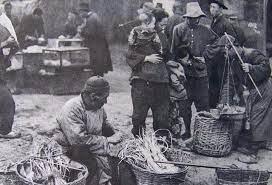
In early August, large numbers of starving people who had been driven out surged towards the blockade lines in the suburbs of Changchun. Because the PLA initially strictly enforced the 'no passage' order, tens of thousands of refugees were trapped in the 'no-man's land' between the KMT and CCP positions, unable to advance or retreat. They lacked food and water, were exposed to the elements day and night, and the ground was littered with the bodies of the starved. PLA sentries witnessed many elderly people and children collapsing and dying by the roadside. Some mothers abandoned their infants by the road before they died, and some refugees hanged themselves in front of PLA posts. Some frontline soldiers were so shaken by the horrific sights that they knelt and wept, and some even defied orders to secretly let refugees pass. The bodies of refugees accumulated day by day. In the Balibao area east of the city alone, about 2,000 people starved to death in the initial period of the blockade. In mid-August, the Northeast Bureau of the CCP, realizing the political and moral impact of such a large number of civilian deaths, began to adjust its strategy. On August 14, the Jilin Provincial Committee of the CCP issued the 'Decision on Handling Refugees Outside Changchun,' establishing a refugee processing committee, which found that over 80,000 refugees were stranded in the blockade zone. It was decided to 'shelter and relieve' the refugees who had already left the city and were on the verge of starvation. On August 16, the First Army Group held a military conference, further tightening the encirclement and moving its command post forward. At the same time, according to instructions, it began to allow some refugees to pass through in a controlled and phased manner. Tang Tianji, the deputy political commissar of the First Army Group, established three principles: only provide relief to refugees on the verge of death near the blockade line, not to those leaving the city from within; designate routes and allow a small number to pass, investigate their identities before providing relief and issuing refugee certificates and grain; and to shelter and resettle skilled workers among the refugees. Under this policy, the PLA tentatively opened some passages in August. In just three days, tens of thousands of refugees sought help, and ultimately 20,000 were rescued. Seeing this, the KMT army then drove out tens of thousands more starving people from the city, immediately overwhelming the buffer zone. The repeated cycle of opening and closing the blockade prolonged the tragedy: for a few days when passage was allowed, grain prices in the city briefly dropped from their peak (the black market price of sorghum rice fell from 7 million to 5 million Fabi per jin), only to soar again to 10 million when the blockade was reinstated. By the end of August, the siege had lasted for more than three months, and the fields around Changchun were scattered with piles of anonymous bones. In its propaganda, the CCP accused the 'Chiang army of creating famine by driving out citizens and seizing their grain,' contrasting the KMT's cruelty with its own measures of 'releasing refugees in batches and setting up soup kitchens.' But regardless, the area around Changchun had become a living hell. A reporter described the refugees as 'so weak from hunger that they wouldn't waste energy, men and women relieving themselves in public.' The black market in Changchun even saw the sale of human flesh! Unlike the Central Plains region, the Manchuria had always been a land of abundance, and famines were rare. Yet, the unprecedented tragedy of cannibalism was now unfolding in Changchun, on the playing field of the KMT-CCP struggle.
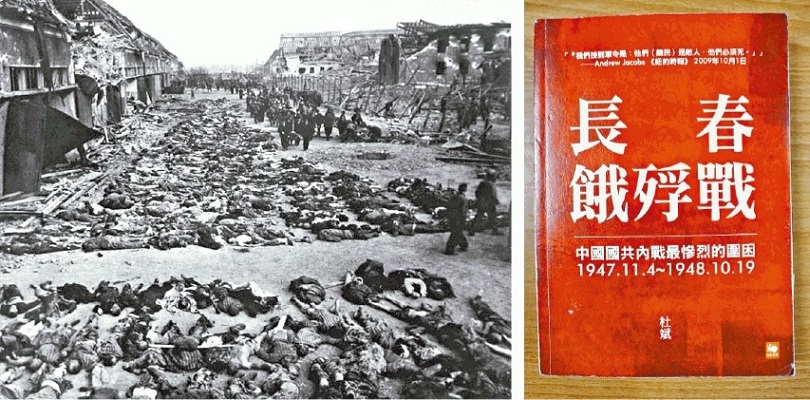
In early September, the main force of the Northeast Field Army launched the Liaoshen Campaign on the outer front, moving south to capture Jinzhou and other areas, while the troops besieging Changchun continued to monitor and contain the trapped enemy. On September 9, Lin Biao, Luo Ronghuan, and others cabled Mao Zedong with a 'Report on the Siege of Changchun.' The report frankly admitted that the PLA's strategy of 'encircling without attacking' had caused a large number of deaths from starvation and malnutrition among the civilian population. However, letting the starving people go would be exploited by the KMT army to relieve the pressure of defending the city. Therefore, it was necessary to carefully manage the 'release' and 'containment' and to provide limited rescue. The report also mentioned that the long siege had led to war-weariness and disease among the frontline troops. Some officers and soldiers, unable to bear seeing their fellow countrymen starve to death in the city, began to question the righteousness of the Communist Party, while others suspected that the 'encircling without attacking' strategy was a sign of the army's inability to take the city and began demanding an end to the siege. To address these issues, the political department of the Northeast Field Army intensified its ideological mobilization, using the confessions of captured KMT soldiers to show that the defenders of Changchun were in extreme difficulty, in order to bolster the troops' patience. At this time, the situation inside Changchun was desperate. The Associated Press reported that about 500 people were starving to death in the city every day. The streets were 'littered with the bodies of the starved, and stray dogs roamed freely,' and there were even incidents of cannibalism. According to post-war statistics, an average of about a thousand people starved to death in Changchun every day in the late summer and early autumn of 1948.
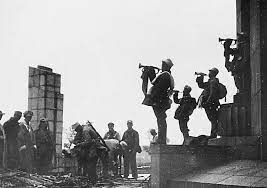
In October, with the annihilation of the main KMT forces in the Liaoxi Corridor at Jinzhou, the strategic objective of the siege of Changchun was essentially achieved. Furthermore, the defending KMT troops, who had been on half-rations for a long time, were demoralized, and large numbers of officers and soldiers deserted or surrendered. On October 17, Zeng Zesheng, the commander of the Sixtieth Corps, the weaker of the defending units, decided to lead his troops in defecting to the Communists. In the early morning of October 19, Zeng Zesheng sent a telegram announcing the uprising, and the Sixtieth Corps switched sides and opened the city gates. Zheng Tingji, the commander of the KMT's New Seventh Army, seeing the situation, subsequently chose to surrender. Changchun was thus declared liberated, and the five-month siege ended in a 'bloodless' manner. When the PLA entered the city, they were met with the sight of a lifeless 'city of the dead.' The city was in ruins; of the approximately 7 million square meters of buildings, 2.3 million square meters had been destroyed during the siege. The wooden doors, windows, and beams of residents' houses had long been burned as firewood or used to build fortifications, and the bark and leaves of the trees in the city's green spaces had been eaten clean. The sides of the streets were piled high with uncollected bodies and remains, and the emaciated survivors were on the verge of death. Of a pre-war population of over 500,000, only about 170,000 survivors remained in the city after the war. This meant that at least 300,000, and perhaps as many as 400,000 to 500,000, ordinary people had perished. The comparison of this catastrophe to Hiroshima is even more chilling: the atomic bomb on Hiroshima claimed nearly 140,000 lives in 9 seconds; Changchun, over a period of 5 months and without a large-scale assault, 'bloodlessly' starved to death several times that number of civilians.
Source Zhang Zhenglong
The author interviewed hundreds of people who had working relationships with Lin Biao to compile this documentary-style work. It contains numerous telegrams between Lin Biao and the CPC Central Committee led by Mao Zedong. The book covers sensitive topics such as forced military recruitment and the mass starvation of civilians during the Siege of Changchun. Before being banned, it sold over 100,000 copies in China.
Read More →Source Du Bin
Through this book, the outline of the Siege of Changchun becomes clear: After World War II, Mao Zedong wanted to capture Changchun as the capital for CCP's confrontation with the ROC government. Lin Biao employed a starvation tactic of 'blocking people from leaving and food from entering', besieging Changchun for 350 days. A city of at least 600,000 people was reduced to just 170,000.
Read More →Source Da Kang's Talk
Answering audience questions
Source Li Su Hi5 First Channel
During the 1948 Chinese Civil War, a tragic event occurred that the CCP official history still refuses to face - hundreds of thousands of civilians died. This was the Siege of Changchun. Why did so many innocent civilians die during this military standoff?
Source Lai Zi En Dian
Former KMT 60th Army HQ radio operator Li Jianping recounts his experiences during the Siege of Changchun.
Source Sakamoto Ryoma
Valuable footage showing the construction of Xinjing (Changchun). The city grew from about 130,000 people in 1931 to a metropolis of 860,000 by 1944.
Source Long Yingtai
In her literary non-fiction work 'The Big River, The Big Sea', Long Yingtai reveals to overseas readers the historical truth about the Siege of Changchun and the Soviet 'liberation' monument.
Read More →Source Maple Leaf Stories
In late May 1948, the Northeast Field Army, consisting of Zhong Wei's 12th Column and 5 independent divisions, formed a siege around Changchun according to plan. KMT Deputy Commander-in-Chief Zheng Dongguo, along with his 100,000 KMT troops and hundreds of thousands of Changchun citizens, did not yet know what fate awaited them in the coming months...
Read More →
Latest Messages:
Loading messages...