
Who Are We? — Redefining the Boundaries of 'Dongbeiren' Identity
The formation of 'Dongbeiren' (Northeast Chinese) identity has its historical and cultural background, and the Northeast region as a whole possesses a unique character. The author argues that 'Dongbeiren' identity should take precedence over other identities, questions external stereotypes and one-sided extraction of benefits from the Northeast, and calls for 'Dongbeiren' to rebuild their self-confidence and sense of boundary.
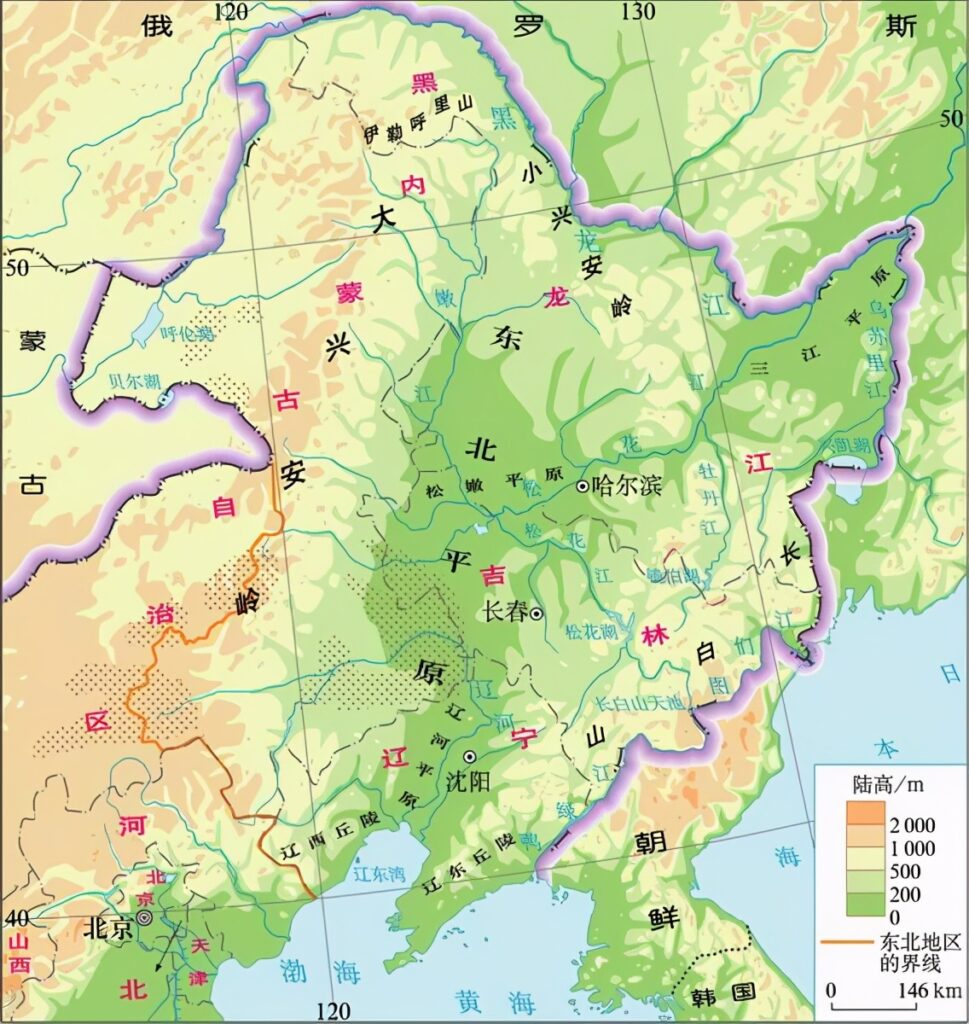
No matter where they go, a Dongbeiren (person from the Northeast) will invariably say, “My hometown is Dongbei,” when greeting someone who speaks Chinese. This phenomenon is commonplace, and the reason behind it lies in the shared historical, cultural, and economic lineage of the Dongbei region. Historically, whether divided as the Nine Eastern Provinces, Six Eastern Provinces, Four Eastern Provinces, or Three Eastern Provinces, the geographical scope has never extended beyond our traditional impression of the Northeast. For the past two hundred years, the Dongbei region has neither merged with Hebei like Anhui and Jiangsu, nor seen its borders intersect like the provinces of the Central Plains. Even within today’s Inner Mongolia Autonomous Region, a clear boundary still exists between Xilin Gol League and the four eastern leagues: one side calls themselves Inner Mongolians, while the other calls themselves Dongbeiren. The boundary that Southern Chinese people use to distinguish between friend and foe, demarcated by the Great Wall, is self-evident. This boundary, a product of the idea of Hua-Yi distinction (华夷之辨), has remained unchanged throughout the two-thousand-year changes of the Central Plains dynasties and persists to this day.
If the answer to a question is supported by facts, that answer is easily accepted. Dongbei has been an integrated whole since ancient times, once flourishing and once declining, experiencing both division and unification. Throughout the course of history, the people and events on this land have always been regarded as a complete, organic entity, only meaningful when analyzed as a singular whole. Here, there are no geographical divisions, no provincial differences, no conflicts between natives and newcomers, and no ethnic strife. We share a unified accent, a common historical memory, and even remarkably consistent personalities and values. This is unattainable in some parts of the South where the local dialect changes every ten li (Chinese mile). Arguably, as a Dongbeiren, regardless of your identity perception, Dongbei itself is an independent, complete, and self-contained geographical and cultural domain.
 Based on the fact that Dongbei has historically been a distinct whole separate from the areas inside the Pass (关内, Guannai), some might ask: “I am a Dongbeiren, and I am also a Chinese. How should the relationship between these two be viewed?” My answer is: you are first a Dongbeiren, and second a Chinese. If the two identities conflict, then trust your most immediate, most microscopic identity, question those vague identities, and re-examine their definitions, standards, and the intent behind them. Although Dongbei is currently part of China, the mainstream narrative tells us that as the Eldest Son of the Republic (共和国长子), we must contribute to the nation’s industrial construction and food security. But have you noticed that this relationship is abnormal: there is hardly any other country where a region sustains decades of one-way output without compensation. This is a classic colonial model, and the root of the problem is that Dongbeiren have lost their sense of boundary about “I am a Dongbeiren.” Southerners prioritize local interests and are indifferent to the circumstances of other regions, and they have never regarded Dongbei as their compatriot, because genuine compatriots do not engage in long-term, one-sided taking and exploitation.
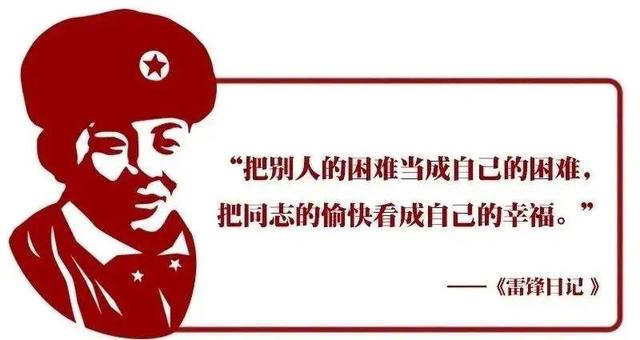
When Southerners prioritize local interests while demanding that Dongbeiren consider the overall situation, the flow of benefits can only be one-way. The phrase “Dongbeiren are all living Lei Fengs” (“东北人都是活雷锋”) is precisely the greatest curse upon Dongbeiren.
 “Northeast Revitalization” (“东北振兴”) has been shouted for over twenty years; it has become the biggest empty promise every Dongbeiren has seen. What we must do is question and break the boundaries drawn for us by outsiders based on their interests, and reclaim the sense of Dongbeiren identity. Some are compatriots, others are not.
If you think the article is good, please forward and share it.
If you have good ideas, please contribute!
Feel free to reward the author!
Your encouragement is our greatest motivation to move forward.

ETH
ETH: 0x0155713eFf177333849cC63a19645675a1E13882